Comparison
Wood Burning Without a Wood Burning Tool: Gel, Marker and Other Methods
Published
Short answer
There are four realistic ways to get a burned look without a wood burning pen: burning gel or paste through a stencil, a scorch marker, a soldering iron you already own, and a small torch for broad darkening. Gel and marker both need a heat gun. Scorch Marker asks for at least 1500 W and about 350 F at the wood. A hair dryer is not hot enough.
This page is for someone who wants a burned sign, gift or board and does not own a pyrography pen. Three questions sort the methods. Do you need letters and shapes, or only a darker surface? Do you own a heat gun? Will you work through a stencil or freehand? Every method here needs bare, untreated wood and ventilation. The figures come from the makers' own instructions, and nothing was burned or measured by this site. Home-built electrical burners and high-voltage fractal burning are left out on purpose.
Four ways to burn wood without a wood burning tool
The first two methods are chemical: a compound goes on the wood and a heat gun darkens it. The other two use direct heat. Compare what each one asks you to own and how much control it gives over the design.
| Method | What you need | Control | Main limit or risk |
|---|---|---|---|
| Burning gel or paste | Jar of paste, stencil, squeegee, heat gun | Crisp stencil shapes and lettering | Bleeds if the stencil lifts or the layer is thick |
| Scorch marker | Marker and a heat gun of at least 1500 W | Freehand lines, lettering, stencil fills | Thin fluid spreads on soft or rough wood |
| Soldering iron | An iron you own, a clean tip, a stand | Lines and dots, no shading tip | Tip is shaped for solder, and the barrel is hot |
| Small torch | Hand torch on propane or MAPP gas | None for designs: it darkens whole surfaces | Open flame, so the work area must be fire-safe |
Wood burning gel or paste, the stencil tool for signs
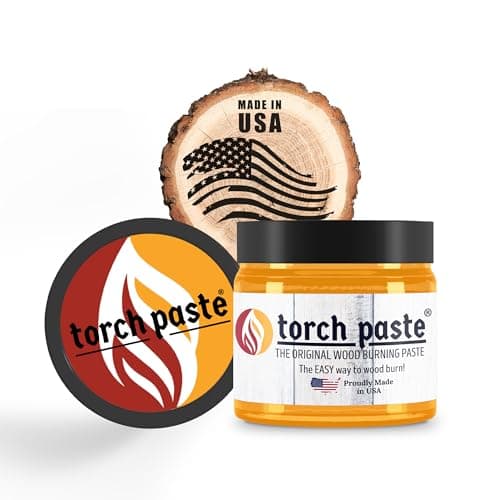
Gel or paste is the closest thing to a printed burn. It is thick, so it stays inside a stencil opening. Torch Paste, the brand behind the search term, gives this method: sand to 220 grit, rub the stencil down well, spread a thin layer with a squeegee, scrape the excess back into the jar, lift the stencil and wait 2 to 3 minutes. Then heat with a gun that reaches 400 C or more until the design burns.
Wood burning with torch paste does not mean a torch. The maker's instructions name a high-powered heat gun. What wood burning paste is explains the compound, and the gel and paste guide compares jars.
Scorch marker instead of a wood burning pen
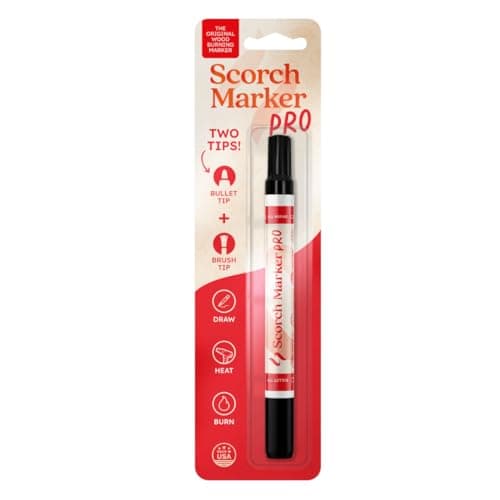
A scorch marker is a felt-style pen filled with heat-activated fluid. You draw on wood sanded to at least 320 grit, then heat the lines until they turn brown. The maker says the reaction needs about 350 F and recommends a heat gun of at least 1500 W, preheated. For a small piece it also describes an oven at 350 F for about 10 minutes.
The marker is the freehand option: names, borders, simple drawings. Its fluid is thin, so use little and test on a scrap of the same wood. The comparison of a scorch marker and a wood burning pen goes through line control and shading.
Can a soldering iron work as a wood burning pen?
It can mark wood. A solid-point wood burning pen is built like a soldering iron, with a heating element in the barrel and a metal tip on the end. Walnut Hollow's Creative Versa-Tool does both jobs with different points, and its hottest zone lists both soldering and wood.
The limits are the tip and the heat. A soldering tip is shaped to melt solder, usually a cone or chisel, and there is no shader, so lines and dots are possible but shading is slow. An iron with no dial gives one heat, and tone then depends on hand speed: the longer the tip rests, the darker the mark. Soldering tips are tinned, which means coated with solder, in normal use. Fit a clean tip that has never carried solder. Use the stand, light pressure and a scrap first. See wood burning tool vs soldering iron for tips and threads.
Wood burning with a torch instead of a pen: what it can do
A torch darkens a surface. It cannot draw. The usual technique is charring a whole board, known as shou sugi ban. Extreme How To describes it with a hand torch on propane or MAPP gas for smaller projects: pass the flame along the grain in smooth, even strokes, over several passes, in a place away from flammable materials. The softwoods it names are hemlock, pine, spruce and fir.
For designs, Scorch Marker says a large open flame such as a propane torch can also activate its marker. A heat gun remains what it recommends, and it tells users to keep an extinguisher nearby whenever there is an open flame.
Note.An open flame is the highest-risk method on this page. Work only where an open flame is safe, away from anything flammable, with an extinguisher within reach. Keep stencils, vinyl and finishes away from the flame.
Which method fits which project without a pyrography pen
Match the method to the result you want, not to what looks easiest. A stencil decides most of it: with one, a paste gives the cleanest edge, and without one, a marker is the simpler choice.
- Stenciled sign with lettering: burning gel or paste and a heat gun.
- Hand lettering, small gifts and wood slices: a scorch marker and a heat gun.
- A few simple lines or dots with nothing to buy: a soldering iron with a clean tip.
- A rustic, darkened board, frame or shelf with no design: a small torch.
- Shading, fine detail or leather: none of these. That is the job of a pen, and the beginner kit guide compares starter pens.
Rules for every method: bare wood, heat tool and ventilation
Heat only bare, untreated wood. Never use pressure-treated, painted, stained or varnished wood, MDF or particle board. Torch Paste says its paste is meant for unfinished surfaces and warns that sealer, stain or paint may give off harmful fumes. Pale, even-grained wood such as basswood shows the design best.
Work with ventilation: an open window and a fan that pulls smoke and fumes away from your face. The makers ask for eye protection near a heat gun. Never touch the nozzle. A dust mask is for sanding dust and does not filter smoke or gases. More detail is in is pyrography safe.
Quick answers
Short answers to the searches people type about burning wood without a pen. Figures are the makers' own, as given above.
- Is wood burning with torch paste done with a torch? No. Torch Paste is a brand of burning paste. Its maker's instructions call for a heat gun that reaches 400 C or more.
- Does wood burning with a soldering iron work? For simple lines and dots, yes. With no shading tip and often a single heat, shading is slow and uneven.
- Is there wood burning without ammonium chloride? Direct heat uses no compound at all: a pen, a soldering iron or a torch. The marker and paste makers checked here list no ingredients.
- What are wood burning techniques with a torch? Mainly charring a whole surface along the grain. A torch does not draw lines or letters.
What you need for this
 See price on AmazonAmazon
Torch Paste wood burning paste, 3 oz jar
 See price on AmazonAmazon
Scorch Marker Pro, bullet and brush tips, 1 marker
From Best Wood Burning Markers: Scorch Pens and Chemical Burn Pens
 See price on AmazonAmazon
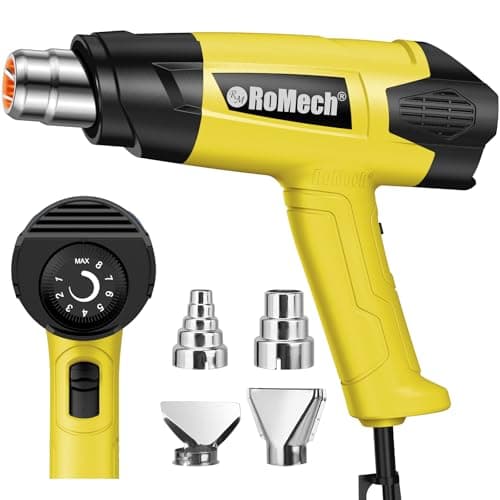
ROMECH 1500 W heat gun, variable 120 to 1200 F
 See price on AmazonAmazon
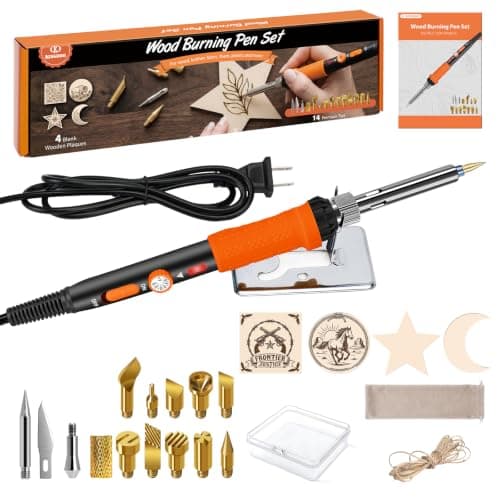
K KERNOWO 23-piece kit, dial 200-450 C, 14 tips
From Best Wood Burning Kit for Beginners: Starter Pens Compared